
Winter Driving Accidents in Eastern Idaho: Who's at Fault on Ice and Snow?
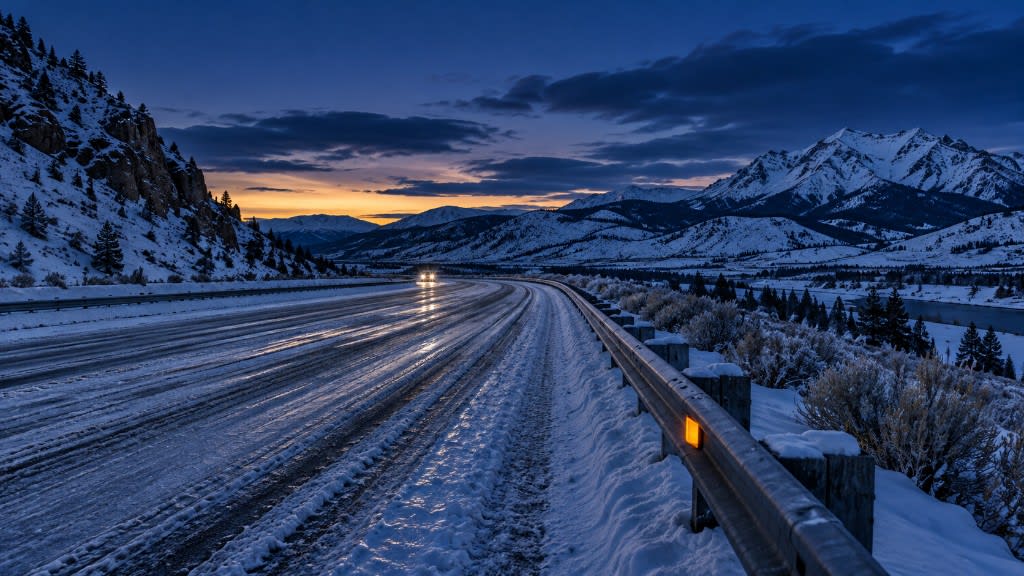
Ice on I-15 or US-20 does not decide a crash by itself. Fault in an Idaho Falls winter car accident still comes down to what each driver did in those conditions.
People assume a snowstorm means everyone shares the blame. Idaho law is more specific than that. Speed for conditions matters. Following distance matters. So does Idaho's modified comparative fault rule.
This is for people hurt in a winter crash in Idaho Falls, Bonneville County, or on the corridors toward Rexburg and Rigby who need to know who pays.
Speed for conditions is the basic rule
Idaho Code 49-654 says you may not drive faster than is reasonable and prudent under the conditions, including weather and highway conditions. The posted limit is a maximum for ordinary conditions. It is not a safe-harbor number on packed snow.
The Idaho Driver's Manual makes the same point. If you drive too fast for ice, snow, or slush, you can violate the basic rule even when the speedometer is under the posted limit. Slowing down is not optional because the sign still shows 75 or 80.
Posted limit vs. actual hazards
Bridges and shaded stretches stay slick after the rest of the lane looks wet, not frozen. That shows up on the connector, on I-15 through Idaho Falls, and on US-20 toward Rexburg and Rigby every winter.
Driving dynamics on slippery roads
A two vehicle crash on black ice often starts with a following distance that looked fine in dry pavement and failed in a few hundred feet. The second driver still has to account for the road in front of them. "I could not stop" is a description. It is not a legal conclusion.
Cruise control on packed snow is a bad idea for the same reason. The vehicle keeps a set speed the driver should be reducing. That fact can matter in the investigation, along with speed, lane position, and lighting.
Ice does not automatically split fault in half
The other driver's insurer will often argue that "everyone was going too fast" or that you should have stayed home. Sometimes that argument has facts behind it. Sometimes it is a way to cut the claim.
A driver who entered the lane too fast, followed too close, or failed to account for a slide that was already underway can still be at fault. A driver who was stopped, or nearly stopped, with lights on is not automatically at fault because the road was frozen.
Hazardous road conditions
Hazardous road conditions explain why a crash happened. They do not erase the duty to drive for those conditions. Ice, ruts, slush, and poor visibility all go in the file. So do speed, following distance, and whether a driver had time to react.
Visibility in driving
Snow, fog, and night driving on US-20 cut what you can see at an intersection or a stop sign. If a driver rolled a stop or entered an intersection they could not clear, that is part of fault. If another driver had no lights on in a squall, that is part of fault too.
Photos of the ice, the ruts, the lighting, and the vehicle positions matter more than a one-line weather report. Get them before the plow comes through.
Chain-reaction crashes on I-15 and US-20
Eastern Idaho winters produce pileups. One slide, then three more cars, then a truck that cannot stop. Insurers try to pin the whole loss on the last impact you felt.
That is not always the legal story. The first driver who created the hazard may still bear the largest share. A later driver who had no time and no distance may have a different share. A driver who hit you after you were already stopped can be a separate negligent actor.
Accident reports
Call the police. In Idaho Falls and Bonneville County, the crash report is often the first document the insurance company reads. Idaho State Police handles many interstate wrecks. The report is not the last word on fault. It is a starting point. Ask for the report number before you leave the scene.
Large vehicle awareness
A loaded truck takes longer to stop on ice than a passenger car. That does not automatically make the truck driver at fault, and it does not automatically clear the car driver. Weight, speed, lane, and whether the truck still had a chance to stop all go into the same comparative-fault math.
Idaho's modified comparative fault rule
Idaho Code 6-801 is a 50% bar. You can recover if your share of fault was not as great as the person you are claiming against. Your recovery is reduced by your percentage. If you are 50% or more at fault, you may be barred as to that person.
Winter accident factors
In a three-car ice crash, those percentages get argued hard. An insurer may offer a small check that treats you as almost equally to blame. Once you cash it and sign a release, the rest of the claim can be gone.
We explained the statute in Idaho Comparative Fault Explained. The winter version is the same rule with worse facts and worse photos if you wait.
Most injury claims still have a two-year filing deadline (Idaho Code 5-219). Ice melts. Cameras overwrite. Do not use the season as a reason to wait.
What to do after a winter crash
Get off the travel lane if you can do it safely. Call the police. Get medical care even if you think it is "just stiff." Photograph the roadway, the sky, the vehicles, and any ice on bridges or overpasses. Write down what you remember about speed, following distance, and which impact came first.
Do not apologize on the shoulder as if that is a legal admission you have thought through. Be factual with the officer. Save the report number.
If anyone needs a hospital, go. Injuries from a winter crash are easy to shrug off in the cold and harder to prove later if you skip the exam.
For crash steps in any season, see What to Do After a Car Accident in Idaho.
How Browning Law handles an Idaho Falls winter car accident
Browning Law handles winter car accident claims in Idaho Falls and across Eastern Idaho. Allen Browning has 40+ years in Idaho courts and 114+ jury trials. He worked in the insurance industry before becoming a plaintiff's attorney. Combined team experience is 78+ years.
Personal injury cases are handled on contingency. No attorney fee unless we recover money for you, subject to a written agreement. Free initial consultation.
If you were hurt in an Idaho Falls winter car accident, start with our car accident lawyer in Idaho Falls page or our personal injury lawyer in Idaho Falls page. Call (208) 542-2700.
Idaho Falls personal injury
Idaho Falls personal injury work at Browning Law starts with a free consultation. You can ask for a free case evaluation of the crash, the insurance file, and whether a personal injury claim is worth filing.
Free case evaluation
Bring the crash report, photos of the ice, medical records, and any letters from the insurance company. Those documents tell you how fault and coverage actually look.
Free consultation
Call (208) 542-2700 for a free consultation with an injury attorney. Experienced attorneys can discuss your personal injury claim, the winter accident factors, and the insurance company file.
Frequently Asked Questions
Am I automatically at fault if I crash on ice in Idaho?
No. Ice and snow are conditions. Idaho still asks whether each driver used a speed that was reasonable and prudent under Idaho Code 49-654, and how fault is shared under Idaho Code 6-801.
What does "speed for conditions" mean in Idaho?
Idaho Code 49-654 says you may not drive faster than is reasonable and prudent under the actual and potential hazards, including weather and highway conditions. The posted limit is not a safe harbor on packed snow or black ice.
How does comparative fault work in a winter pileup?
Idaho Code 6-801 reduces your recovery by your percentage of fault. If you are 50% or more at fault as to a particular defendant, you may be barred from recovering against that person. In a chain-reaction crash on I-15 or US-20, those percentages are often disputed.
What evidence helps an Idaho Falls winter car accident claim?
Photos of the ice, ruts, lighting, and vehicle positions before the plow comes through. The crash report, witness names, dash-cam, and a timeline of which impact caused which damage. A one-line weather report is not enough by itself.
Idaho Falls winter car accident
An Idaho Falls winter car accident is still a fault case. Ice explains the surface. It does not decide who pays.
Idaho
Idaho uses speed for conditions and a 50% comparative-fault bar. Those two rules decide most winter injury claims in this state.
This article provides general information about Idaho law as of 2026. It is not legal advice for any specific situation. Idaho Code sections referenced are cited where applicable. Consult an attorney about your individual circumstances.
Frequently Asked Questions
Am I automatically at fault if I crash on ice in Idaho?
No. Ice and snow are conditions. Idaho still asks whether each driver used a speed that was reasonable and prudent under Idaho Code 49-654, and how fault is shared under Idaho Code 6-801.
What does "speed for conditions" mean in Idaho?
Idaho Code 49-654 says you may not drive faster than is reasonable and prudent under the actual and potential hazards, including weather and highway conditions. The posted limit is not a safe harbor on packed snow or black ice.
How does comparative fault work in a winter pileup?
Idaho Code 6-801 reduces your recovery by your percentage of fault. If you are 50% or more at fault as to a particular defendant, you may be barred from recovering against that person. In a chain-reaction crash on I-15 or US-20, those percentages are often disputed.
What evidence helps an Idaho Falls winter car accident claim?
Photos of the ice, ruts, lighting, and vehicle positions before the plow comes through. The crash report, witness names, dash-cam, and a timeline of which impact caused which damage. A one-line weather report is not enough by itself.
Talk with Browning Law
If you have questions about your situation, call or email us. The initial consultation is free.
Call: (208) 542-2700
Email: personalinjury@browninglawidaho.com
Related reading
Main page: Personal injury lawyer in Idaho Falls
Related Resources
Continue reading: Uninsured and Underinsured Motorist Claims in Idaho , Who Pays Your Medical Bills After an Idaho Falls Car Accident? .