
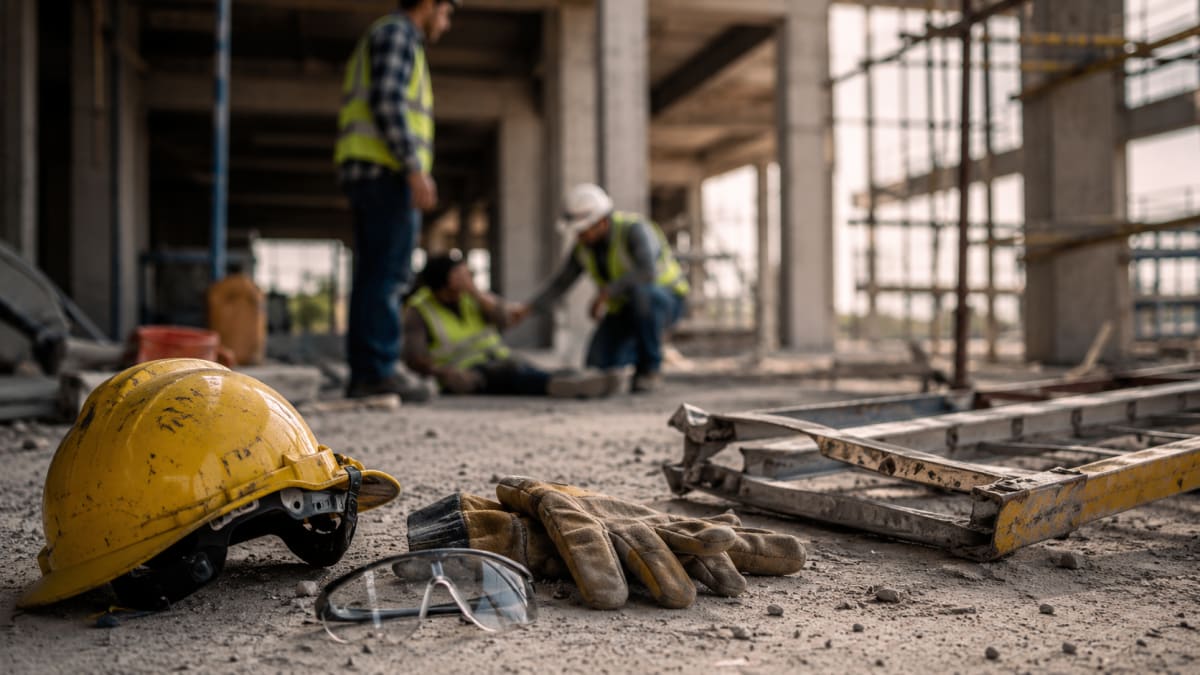
Construction Accident Lawyer in Twin Falls, Idaho
Third-party construction injury claims in Twin Falls and Twin Falls County | Free consultation | No fee unless we recover
A Worksite Injury Can Involve More Than One Claim
Twin Falls keeps building: commercial projects along the retail corridor, new housing, and expansions at the food processing plants that anchor the Magic Valley economy. More construction means more workers hurt on sites where several contractors, equipment operators, and property owners all share responsibility for safety.
If you were hurt on a job site, workers' comp is usually only part of the answer. Comp pays limited benefits and never covers pain and suffering. When someone other than your employer caused the injury, a general contractor, another sub, an equipment operator, or a property owner, a separate negligence claim may recover what comp leaves out. Browning Law has handled Idaho injury cases since 1983 and can tell you whether a third-party claim exists. Free consultation, no attorney fees unless we recover for you.
You can also visit our Twin Falls personal injury lawyer , Personal injury practice area , Case results , and Twin Falls lawyers & attorneys .

Jump To
Free consultation
No attorney fees unless we recover compensation
Talk to a lawyer before a recorded statement
Why construction accident cases are different
Construction sites involve heavy equipment, multiple employers, changing conditions, and tight deadlines. When something goes wrong, fault is rarely simple. A fall, a struck-by injury, or an electrocution may involve your employer, a subcontractor, a property owner, an equipment rental company, or a negligent driver in a work zone.
In Idaho, your claim against your employer usually runs through workers’ compensation under Title 72. That system pays benefits without proving fault, but it generally blocks a direct lawsuit against your employer for pain and suffering. A separate third-party personal injury claim may exist when another party’s negligence caused or contributed to your injury.
- Multiple companies on one site can mean multiple insurance policies
- Workers’ comp and third-party PI claims follow different rules and deadlines
- Insurers may try to shift blame between contractors and the injured worker
How Browning Law helps after a construction site injury
After a serious worksite injury, you should be focused on treatment and stability, not untangling who is responsible. We step in to identify every viable claim, preserve evidence, and coordinate medical records before memories fade and photos disappear.
Allen Browning has personally tried 114+ jury cases in Idaho. That trial background matters when a general contractor or equipment company refuses to take your injury seriously. We make every effort to settle before trial, but we prepare cases as if they will go to a jury when that is what it takes.
- Early site photos, witness names, and equipment preservation when possible
- Medical records organized to show the full injury, not just the first ER visit
- Claims prepared for real negotiation, with lawsuits filed when offers stay unfair
- Coordination with workers’ comp benefits and subrogation issues when both claims apply
Common causes of construction accidents in Twin Falls
The dangerous conditions are the familiar ones: falls from heights, equipment strikes, trench and structural collapses, and electrical contact. What makes Twin Falls sites distinctive is the mix. Commercial builds, plant expansions, and ag infrastructure projects often put multiple subcontractors, heavy equipment, and tight schedules on the same ground.
When something goes wrong, each company points at the others. Sorting out who controlled the site, who created the hazard, and whose insurance answers for it is the core of a third-party construction case.
- Falls from scaffolding, ladders, and roofs on commercial and residential projects
- Workers struck by equipment, vehicles, or falling material
- Trench collapses and structural failures
- Electrocution and contact with energized lines
- Hazards created by a subcontractor or site owner other than your employer
Common construction accident injuries
Construction accidents can cause catastrophic harm. Even injuries that look manageable at first can turn into long recoveries with lost work and ongoing treatment.
Head injuries are common on construction sites. If you suffered a blow to the head or were knocked unconscious, see our traumatic brain injury lawyer in Twin Falls page for how those claims are handled.
- Traumatic brain injuries and concussions
- Spinal cord injuries and paralysis
- Fractures, crush injuries, and amputations
- Burns and electrocution injuries
- Internal organ damage
- Wrongful death in fatal site accidents
Hurt on a construction site? Talk to a lawyer before you sign anything from an insurer or accept blame for an unsafe condition you did not create.
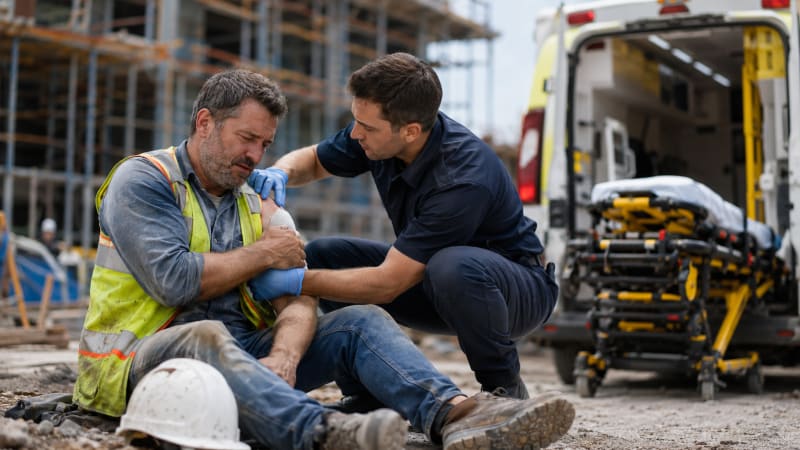
What compensation may include after a construction accident
Workers’ comp benefits and third-party personal injury damages are not the same. Workers’ comp generally covers medical treatment and partial wage replacement tied to work disability. A third-party PI claim can pursue broader damages when negligence is proven, including pain and suffering and full lost earning capacity in many cases.
No honest lawyer can promise a number at the start. What matters is building a case around the full impact of the injury. Browning Law has documented results exceeding $100,000 on our case results page, including a $150,000 construction accident settlement.
Workers’ comp and third-party claims are not the same. The goal is to pursue every valid path without one recovery wiping out the other.
- Past and future medical treatment and rehabilitation
- Lost wages and reduced earning capacity
- Pain and suffering and loss of enjoyment of life
- Permanent impairment and disability when supported by the medical evidence
- If the injury was fatal, surviving family members may have a wrongful death claim
Workers’ comp, third-party negligence, and Idaho law
Idaho workers’ compensation (Title 72) is generally the exclusive remedy against your employer for a workplace injury. You usually cannot sue your employer for pain and suffering on top of workers’ comp benefits. That is the trade-off for a no-fault benefits system.
When a third party caused or contributed to your injury, you may have a separate negligence claim under Idaho Code 5-219, which generally gives you two years from the date of injury to file most personal injury lawsuits. Workers’ comp has its own notice and filing deadlines, often much shorter. Missing either can hurt your rights.
Idaho comparative fault rules under Idaho Code 6-801 may reduce your recovery by your percentage of fault. If you are 50% or more at fault, you may be barred from recovering against other negligent parties in many negligence claims. Construction cases often involve disputes about safety rules, training, and who controlled the hazard.
If you receive workers’ comp benefits and also recover from a third party, the workers’ comp carrier may have a lien or reimbursement right against your personal injury recovery. That subrogation issue needs to be handled carefully so one claim does not erase the value of the other.
You usually cannot sue your employer for pain and suffering on top of workers’ comp, but a negligent subcontractor or equipment company may still owe you full damages.
- Report work injuries to your employer promptly for workers’ comp purposes
- Identify third parties early: subs, GCs, owners, rental companies, manufacturers
- Do not assume one insurance adjuster speaks for every party on the site
- Talk to a lawyer before signing releases that may affect both claims
What to do after a construction accident in Idaho
The first hours and days after a worksite injury matter for your health and your legal options. Construction sites change fast. Evidence that is obvious today may be gone tomorrow.
Get medical help first. Then protect the record. You do not need to have every legal answer on day one, but you do need to avoid mistakes that insurers use later.
- Get medical attention and follow every referral
- Report the injury to your employer for workers’ comp purposes
- Photograph the scene, your injuries, equipment, and hazards if you can
- Write down witness names and what each person saw
- Preserve defective equipment or tools when possible
- Do not give a recorded statement to any insurer without legal advice
- Contact Browning Law to learn whether you have a workers’ comp claim, a third-party claim, or both
Wrongful death after a fatal construction accident
Some construction accidents are fatal. When that happens, a family is left with grief, funeral costs, lost support, and legal questions they should not have to handle alone. A fatal worksite accident may support a wrongful death claim when someone other than the employer’s workers’ comp exclusive remedy applies, or when a third party’s negligence caused the death.
Idaho’s wrongful death statute generally allows a spouse, children, parents, or the personal representative of the estate to bring a claim within two years of the date of death. If you are in that situation, preserve records and get legal guidance early.
If your family is dealing with a fatal construction accident, early evidence preservation and clear guidance on deadlines can matter a great deal.
Ready to talk?
Free consultation. No fee unless we recover.
If you were hurt in a construction accident in Twin Falls, a free consultation can help you understand workers’ comp, third-party negligence claims, and what comes next. No upfront cost, and no attorney fee unless we recover for you, subject to a written agreement.
1615 Grandview Dr, Idaho Falls, ID 83402 · Mon-Fri 9 AM – 5 PM
Frequently Asked Questions: Construction Accident Cases in Twin Falls
Can I sue my employer after a construction accident in Idaho? +
Generally, no. Idaho workers’ compensation is typically the exclusive remedy against your employer for a workplace injury (Title 72). You may still have a separate third-party personal injury claim if another company, property owner, or negligent party caused or contributed to your injury. See our workers’ compensation page for the benefits side and this page for third-party negligence claims.
Can I have a workers’ comp claim and a personal injury claim at the same time? +
Yes, in many construction cases. Workers’ comp benefits from your employer and a third-party negligence claim against another party are separate legal processes. Subrogation and lien issues need to be handled carefully so one recovery does not unexpectedly reduce the other. We can help coordinate both paths when they apply.
Who can I sue besides my employer on a construction site? +
Common third parties include general contractors, subcontractors, property owners, equipment rental companies, manufacturers of defective tools or machinery, and negligent drivers who strike workers in a construction zone. Who you can sue depends on the facts and who controlled the hazard that caused your injury.
What if a subcontractor or equipment company caused my injury? +
That is a classic third-party scenario. If another crew created an unsafe condition or defective equipment contributed to your injury, you may have a personal injury claim against that party in addition to workers’ comp benefits through your employer. Early evidence preservation matters.
How long do I have to file a construction injury claim in Idaho? +
For most negligence-based personal injury claims, Idaho’s statute of limitations is generally two years from the date of injury (Idaho Code 5-219). Workers’ comp claims have separate notice and filing deadlines, often much shorter. Do not wait. Contact us as soon as you can.
What if OSHA cited the site after my accident? +
An OSHA citation can be useful evidence in a third-party negligence case, but it does not automatically establish civil liability. Your lawyer still needs to prove negligence and connect it to your injury. Preserve any safety reports and inspection records you can access.
What damages can I recover in a third-party construction claim? +
Unlike workers’ comp, a successful third-party negligence claim may include pain and suffering, full lost wages, and other damages not covered by workers’ comp alone. The available damages depend on your injuries, fault allocation, and insurance coverage.
What if a defective tool or machine caused my construction injury? +
You may have a product liability claim against the manufacturer, distributor, or other parties in the supply chain. That is separate from workers’ comp. Preserve the equipment and document the defect before it is repaired or removed from the site.
I am already getting workers’ comp for a Twin Falls jobsite injury. Can I still bring a claim? +
Often, yes. Workers' comp bars most lawsuits against your own employer, but not against third parties like a general contractor, another subcontractor, or an equipment operator who caused the injury. The two claims run side by side, and comp may have a repayment interest in the third-party recovery. We handle that coordination so it is done right.
Related Resources
Primary Hubs
Related Twin Falls Services
Need a Construction Accident Lawyer in Twin Falls?
Call or text Browning Law to talk through what happened and get clear on your next step. Free consultation, no attorney fee unless we recover for you, subject to a written agreement.