
Domestic Violence Defense Lawyer in Idaho Falls, Idaho
Domestic violence defense in Bonneville County | Free consultation | Jail visits available
A Domestic Violence Charge Can Restrict Your Home, Your Record, and Your Rights
A domestic violence charge in Idaho Falls can turn your home life upside down overnight. You may be ordered to stay away from your partner, your children, or your own house. You may lose access to firearms. You may face jail, fines, and a criminal record that follows you for years.
Domestic violence cases move quickly and carry consequences that extend beyond the courtroom. You need a lawyer who understands Idaho DV law, Bonneville County courts, and how to protect your rights while the case is pending.
Browning Law defends domestic violence cases in Idaho Falls and across Eastern Idaho. In 2023, felony battery and attempted strangulation charges were dismissed. Allen Browning has also secured not guilty jury verdicts on felony domestic battery. With 114+ jury trials and 40+ years in Idaho courts, the firm brings serious trial experience to DV cases.
Call (208) 542-2700 for a free consultation. Visit our criminal defense practice area, our Idaho Falls criminal defense attorney page, or contact us online.

Jump To
Free consultation
Flat-fee options
Jail visits available
Why domestic violence charges are different
DV cases are not handled like a simple bar fight. Idaho treats domestic battery, violation of a protective order, and related charges as priorities. Prosecutors often pursue these cases even when the alleged victim does not want to proceed. The state can subpoena witnesses and move forward without the victim's cooperation.
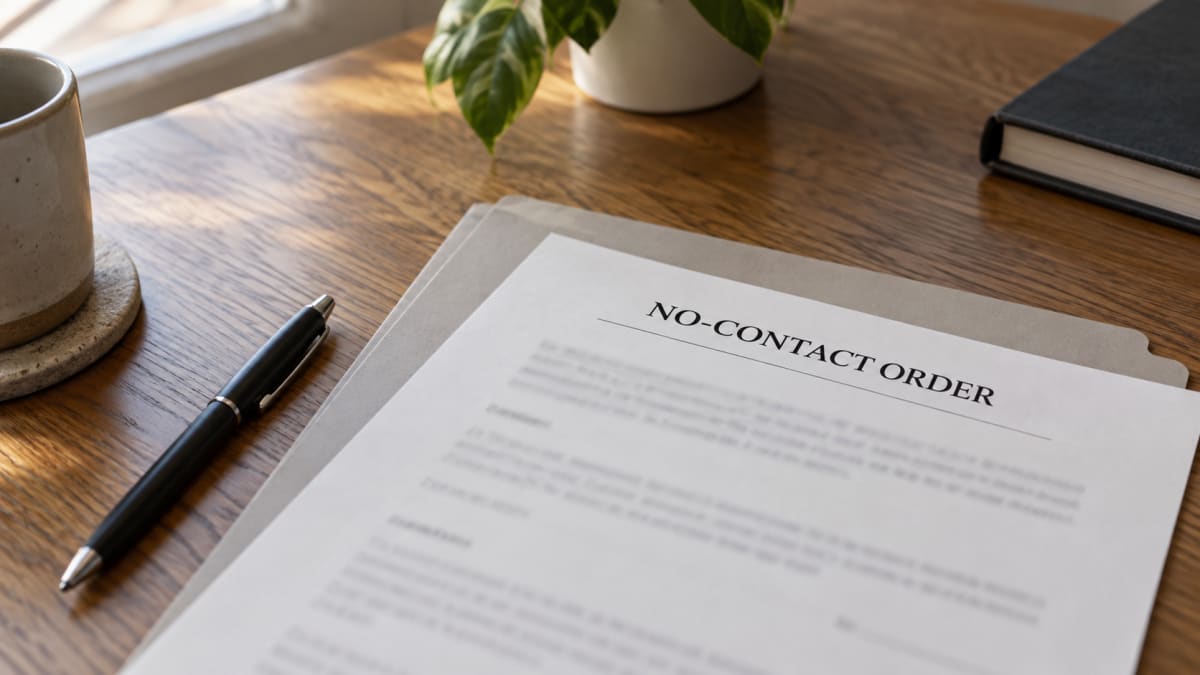
Protective orders and no-contact orders can take effect before you have had a chance to tell your side. Violating a no-contact order, even accidentally, can lead to new charges. The overlap between criminal court and civil protective order proceedings adds complexity.
Domestic violence convictions can affect firearm rights under state and federal law. They can affect custody and divorce proceedings. They can affect employment, especially in jobs requiring background checks or security clearances.
How Browning Law helps
We review the 911 call, witness statements, body camera footage, and medical records. We look at whether the state can prove each element of the charge, including the relationship required for a domestic violence enhancement.
We address protective orders and no-contact conditions. We argue for modifications when appropriate so you can comply with court orders without destroying your living situation or access to your children.
We prepare for trial when the facts support a defense. Self-defense, false accusations, and insufficient evidence are all issues we evaluate based on the record, not assumptions.
In 2023, Browning Law secured dismissal of felony battery and attempted strangulation charges. That result reflects the kind of defense work we do when the state's case does not hold up under scrutiny.
Fees are affordable, transparent, and often flat-fee. Free initial consultation. DV defense is not on contingency.
Common domestic violence situations in Idaho Falls
DV cases in Idaho Falls and Bonneville County often involve:
- Arguments between spouses, partners, or co-parents that lead to 911 calls
- Felony battery or attempted strangulation charges when injuries are alleged
- Violations of no-contact or protective orders
- Cases where both parties were involved but only one was charged
- Cases tied to divorce, custody disputes, or substance use
- Misdemeanor domestic battery for a first offense
Every case has its own facts. The relationship between the parties, the history of calls to police, and the evidence collected at the scene all matter.
What you may be facing
Domestic battery in Idaho is generally a misdemeanor for a first offense, but it can be charged as a felony in certain circumstances, including repeat offenses or when strangulation is alleged. Misdemeanors generally carry up to one year in county jail. Felonies can carry prison time.
Protective orders can remain in effect during and after the criminal case. Violating a protective order is a separate crime. The combination of criminal charges and civil orders can restrict where you live, whom you contact, and whether you can possess firearms.
Sentencing depends on the charge, your history, and the facts. No attorney can guarantee a dismissal or a specific sentence.
If you want to talk through the charge, call Browning Law for a free consultation.
Idaho law and your rights
Idaho Code defines domestic violence offenses and the relationships that qualify for domestic violence enhancements. The state must prove the relationship, the conduct, and the required intent or recklessness beyond a reasonable doubt.
You have the right to remain silent. You have the right to an attorney. If you are served with a protective order, read it carefully and follow its terms until your lawyer can seek modification. Even a text message can violate a no-contact order.
You have the right to cross-examine witnesses and challenge evidence at trial. You have the right to present your own evidence and witnesses. DV cases are often one-on-one disputes where the quality of the defense investigation matters.
No-contact orders and the criminal case run at the same time. Missing a hearing can hurt you even if the facts are disputed.
Why trial experience matters
Prosecutors in DV cases often assume the defendant will plead quickly. When the evidence is weak, inconsistent, or supports a self-defense claim, you need an attorney who will take the case to a jury.
Allen Browning has tried 114+ jury cases in Idaho, including not guilty verdicts on felony domestic battery. That trial background gives Browning Law credibility in negotiations and readiness when the case must go to trial.

A conviction can affect firearms, housing, and future cases. The charge is serious even when nobody wants to go to trial.
What to do if charged or arrested
- Follow any no-contact or protective order to the letter. Do not call, text, or go near the protected person.
- Do not talk to police about what happened without a lawyer.
- Call Browning Law at (208) 542-2700. Jail visits are available.
- Do not discuss the case on social media or with mutual friends.
- Document your own account of events privately for your attorney.
Violating a no-contact order while your case is pending makes everything worse. Compliance is critical.
Free consultation. Clear fees.
Criminal defense is billed with an upfront fee structure, often flat-fee. We do not offer payment plans. The initial consultation is free.
1615 Grandview Dr, Idaho Falls, ID 83402
Ready to talk?
Free consultation. Clear fees.
Criminal defense is billed with an upfront fee structure, often flat-fee. We do not offer payment plans. The initial consultation is free.
1615 Grandview Dr, Idaho Falls, ID 83402. Mon-Fri 9 AM to 5 PM
Frequently Asked Questions: Domestic Violence Defense in Idaho Falls
Can the case proceed if my partner does not want to press charges? +
Yes. The state can prosecute without the victim's cooperation. Prosecutors can subpoena witnesses and use 911 recordings, body camera footage, and officer testimony.
What is a no-contact order? +
A no-contact order prohibits contact with a protected person. It may be issued in criminal court or through a separate protective order proceeding. Violating it is a crime.
Will I lose my guns if charged with domestic violence? +
Domestic violence convictions can affect firearm rights under Idaho and federal law. Protective orders may also restrict possession while the case is pending. We address firearm consequences as part of the defense strategy.
Can I go back to my home if a no-contact order is in place? +
It depends on the order's terms. Some orders exclude you from a shared residence. We can seek modification when appropriate, but you must follow the order as written until it is changed.
What is the difference between domestic battery and regular battery? +
Domestic battery involves a battery against certain defined relationships, such as spouses, cohabitants, or co-parents. The relationship triggers specific penalties and procedures under Idaho law.
Can DV charges be dismissed? +
Dismissals happen when the evidence is insufficient, witnesses are unavailable, or pretrial motions succeed. In 2023, Browning Law secured dismissal of felony battery and attempted strangulation charges. Every case is different.
Does Browning Law handle protective order hearings? +
Yes. We address both the criminal charges and related protective order proceedings as part of the overall defense.
Learn more
Domestic Violence questions, answered
Related Resources
Primary Hubs
Related Idaho Falls Services
Talk with an Idaho Falls criminal defense attorney
Call Browning Law at (208) 542-2700 for a free consultation. We are at 1615 Grandview Dr, Idaho Falls, ID 83402, and we represent clients across Bonneville County and Eastern Idaho. Criminal defense is not handled on contingency, and we do not offer payment plans.