

Slip and Fall Lawyer in Blackfoot, Idaho
Over 40+ years serving Blackfoot | FREE initial consultation | Contingency fees for injury claims
Fall Cases Are Rarely As Simple As They Sound
A fall in Blackfoot often starts in an ordinary place: a grocery aisle that stayed wet, a parking lot that never got salted after freeze-thaw, or an apartment stair the landlord kept putting off. The injuries are not ordinary. Broken wrists, hip fractures, back injuries, and head trauma from hitting concrete can take you out of work and into months of treatment.
If a Bingham County property owner failed to keep the premises reasonably safe, you may have a slip and fall claim under Idaho law. Insurers still reach for the same script. They say the ice just formed, the spill was obvious, or you should have watched your step. Browning Law has handled Idaho premises cases since 1983. Allen Browning worked in the insurance industry before becoming a plaintiff's attorney, so we know how those defenses get built.
We handle Blackfoot and Bingham County fall claims from our Idaho Falls office, including matters that go through the Bingham County Courthouse. Free consultation. No attorney fees unless we recover for you.
You can also visit our Blackfoot personal injury lawyer , Personal injury practice area , Case results , and Blackfoot lawyers & attorneys .
Jump To
Free consultation
No attorney fees unless we recover compensation
Talk to a lawyer before a recorded statement
Why slip and fall claims can be harder than people expect
Slip and fall cases often look straightforward at first. Someone falls. Someone gets hurt. But proving the case takes more than showing you were injured on another person’s property. You usually need evidence showing the dangerous condition existed, that the owner or business knew or should have known about it, and that they failed to fix it or warn people in time.
That evidence can disappear fast. Spills get cleaned up. Ice melts. Security footage gets overwritten. Witnesses forget details. Businesses start building their defense before the injured person even knows what questions to ask.
Slip and fall cases are rarely as simple as property owners make them sound. A lot of slip and fall claims turn into fights over what the owner knew, how long the hazard was there, and whether they had a fair chance to fix it. That is where these cases usually get messy. The business says the spill just happened. The landlord says they did not know about the broken step. The insurer says the danger was open and obvious. Meanwhile, you are left dealing with pain, medical bills, missed work, and a body that may not be healing the way you hoped.
These cases are not about clumsiness. They are about unsafe property conditions and whether the owner failed to act reasonably.
- Property owners and insurers often claim the hazard was obvious or unavoidable
- Surveillance footage may be erased unless it is requested quickly
- Maintenance logs, incident reports, and inspection records can matter
- The defense may argue your shoes, your phone use, or your inattention caused the fall
- Serious injuries from falls are often downplayed, especially when the victim is older
How Browning Law handles slip and fall claims
Our job is to figure out what happened, preserve the available evidence, and build the case around facts. In a fall case, timing matters. The longer the delay, the easier it is for the property owner or insurer to say there is no proof of the condition that caused the injury.
We investigate the property, request reports and footage when available, review medical records, and work to connect the unsafe condition directly to the injuries you suffered. Browning Law has decades of courtroom experience in Idaho. Insurance companies know the difference between a law firm that is ready to push a case and one that is only there to send a demand letter.
- Evidence preservation letters sent early when footage or records may exist
- Incident reports, cleanup logs, inspection records, and maintenance history reviewed
- Witness statements gathered while memories are still fresh
- Medical records organized to show the full scope of the injury and recovery
- Claims prepared for serious negotiation, with litigation filed when needed
Common causes of slip and fall accidents in Blackfoot
Winter is the big one. Blackfoot gets months of freeze and thaw, and businesses that do not stay on top of their sidewalks and lots create ice hazards that last. Inside, the busiest fall locations are the ones with the most foot traffic: grocery stores, downtown Main Street shops, and retail near I-15 and US-26.
Ag and processing work add another layer. Potato and packing facilities around Bingham County involve wet floors, loading docks, and elevated work as a daily condition. When someone other than your employer created the hazard, the case can go beyond workers' comp.
- Ice and snow left on parking lots and walkways along Main Street, US-26, and I-15 retail
- Spills and wet floors in grocery and farm-supply stores without warning signs
- Broken stairs, loose railings, and poor lighting at apartment complexes
- Wet floors and dock hazards in potato and packing facilities
- Uneven pavement and potholes in commercial parking lots
Injuries caused by slip and fall accidents
Falls can cause far more damage than people assume. One bad landing can change someone’s mobility, ability to work, and day-to-day independence. These cases can be especially serious for older adults, but younger people can suffer major injuries too.
A strong claim has to account for the full injury picture, not just the ER bill from the day of the fall.
- Traumatic brain injuries and concussions
- Neck and back injuries
- Herniated discs and spinal injuries
- Hip fractures and pelvic injuries
- Broken wrists, arms, ankles, and legs
- Shoulder injuries
- Knee damage
- Chronic pain and reduced mobility
Slip and falls at work can involve more than one type of claim
Not every slip and fall happens in a store or parking lot. Some happen at work, on job sites, in offices, warehouses, apartment properties, hospitals, and other places where unsafe floors, stairs, walkways, or poor maintenance create real risk. When that happens, the case may involve more than a standard injury claim.
If you were hurt in a fall while working, you may have a workers’ compensation claim. In some situations, there may also be a separate claim against a property owner, contractor, or another third party that caused the unsafe condition.
Injured in a Blackfoot slip and fall? Talk to a lawyer before talking to the insurance company.
What compensation may include after a slip and fall
The value of a slip and fall case depends on the injury, the recovery, how clear the liability is, and how much the fall changed your life. No honest lawyer should promise a number at the start. What matters is building the case around the full impact of the injury instead of letting the insurer reduce it to one urgent care visit and a quick settlement offer.
Some falls lead to surgery, rehab, time away from work, and long-term pain. Some lead to lasting disability. The claim should reflect that.
We build damages around the full impact of the fall, not just the numbers that are easiest to total.
- Emergency treatment, hospital bills, surgery, physical therapy, and follow-up care
- Future medical treatment and rehabilitation
- Lost wages
- Reduced earning capacity if you cannot return to the same work
- Pain and suffering
- Emotional distress
- Loss of enjoyment of life
- In serious cases, damages tied to permanent disability or disfigurement
- If the fall was fatal, surviving family members may have a wrongful death claim
Liability and Idaho comparative fault in slip and fall cases
Idaho follows comparative fault rules under Idaho Code 6-801. That means the defense will often try to argue that you were partly responsible for the fall. They may say you were distracted, ignored a warning sign, wore the wrong footwear, or failed to notice something they claim was obvious.
That argument matters because your recovery can be reduced by your percentage of fault. If you are found 50% or more at fault, you may be barred from recovering against the other negligent party. That is one reason these cases need real preparation. Property owners and insurers do not need to prove you caused all of it. They just need enough blame shifted onto you to cut down the claim.
Strong evidence helps push back against that.
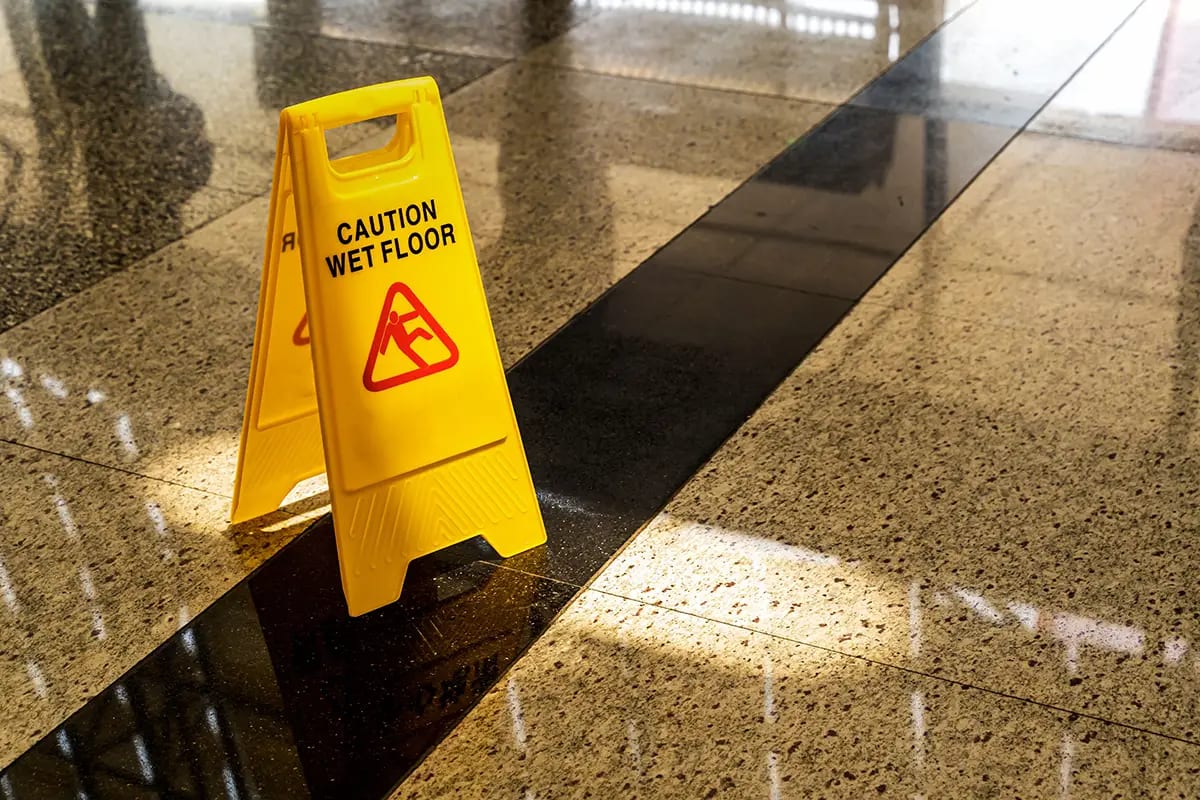
Property owners and insurers often try to shift blame onto you. Early documentation and strong case preparation are the best counters to that strategy.
- Photos of the scene and hazard condition preserved early
- Surveillance footage requested before it disappears
- Witness statements used to show what the property looked like at the time
- Medical records tied clearly to the fall and resulting injuries
- Maintenance and inspection records reviewed for notice and prior problems
What to do after a slip and fall accident
Your first priority is your health. Get checked out right away, even if you think you are only shaken up. Falls often lead to injuries that feel worse a day or two later, especially head injuries, back injuries, and fractures.
After that, try to protect the evidence before it disappears.
- Get medical attention as soon as possible
- Report the fall to the manager, owner, landlord, or property representative
- Take photos of the exact area, including the hazard, lighting, floor condition, weather, and any warning signs
- Get names and contact information for witnesses
- Keep the shoes and clothing you were wearing in case they become relevant later
- Do not give a recorded statement to the insurance company before getting legal advice
- Save medical bills, discharge paperwork, and any communication about the incident
Wrongful death after a fatal fall
Some falls are tragically fatal, especially when they involve traumatic brain injuries, severe internal injuries, or older family members who never recover after the incident. When that happens, a family is left dealing with grief, financial pressure, and legal questions they did not expect to face.
A fatal fall may support a wrongful death claim when negligent property conditions caused or contributed to the death. These cases can include claims for final medical expenses, funeral costs, loss of financial support, and other damages allowed under Idaho law.
If your family is dealing with a fatal fall, early investigation matters.
Ready to talk?
Free consultation. No fee unless we recover.
Call or email Browning Law to discuss a Bingham County slip and fall or premises claim. There is no cost and no obligation.
1615 Grandview Dr, Idaho Falls, ID 83402 · Mon-Fri 9 AM – 5 PM
Frequently Asked Questions: Slip and Fall Cases in Blackfoot
Do I have a case if I slipped in a store or business? +
Maybe. The key issue is usually whether the business knew or should have known about the dangerous condition and failed to fix it or warn customers. A fall inside a store does not automatically mean there is a case, but many valid claims start there.
What if I slipped on ice outside a business or rental property? +
That may still be a valid claim. Ice and snow cases often turn on timing, maintenance efforts, weather conditions, and whether the property owner acted reasonably under the circumstances.
Can I still recover if the property owner says the hazard was obvious? +
Possibly. That is a common defense in fall cases. It does not automatically defeat the claim. The actual condition, lighting, warnings, and surrounding facts all matter.
How long do I have to file a slip and fall claim in Idaho? +
Personal injury claims in Idaho are generally subject to a two-year statute of limitations under Idaho Code 5-219. Waiting too long can also make the case harder because evidence like surveillance footage may be lost.
What if I was partly at fault for the fall? +
Idaho uses comparative fault rules under Idaho Code 6-801. Your recovery may be reduced by your share of fault, and if you are found 50% or more at fault, recovery may be barred.
How much is a slip and fall case worth? +
There is no fixed number. It depends on the injury, medical treatment, time missed from work, long-term effects, and how strong the liability evidence is. Serious falls can involve far more than a quick insurance payout.
I fell on ice outside a Blackfoot business. Is that really a case? +
It can be. Idaho property owners are not liable for every patch of ice, but they are responsible when they knew or should have known about the hazard and did nothing reasonable about it. How long the ice sat there, what the business did about it, and what its snow-removal practices were all matter. We investigate before anyone assumes the answer.
I fell in a Blackfoot grocery store. What do I need to prove? +
A store fall can support a claim when the business knew or should have known about a spill, tracked-in water, or another hazard and failed to clean it up or warn people in time. Photos, an incident report, and video (if it still exists) matter more than a manager saying they are sorry. We look at those facts before anyone writes it off as clumsiness.
Is a slip and fall the same as a premises liability claim? +
Slip and fall is the everyday term. Premises liability is the legal category. It covers injuries from unsafe property conditions, including ice, wet floors, broken stairs, and poor lighting. The question is the same: did the owner or occupier fail to keep the property reasonably safe?
Do you handle Bingham County slip and fall cases from Idaho Falls? +
Yes. We are licensed statewide and handle Bingham County premises claims from our Idaho Falls office. Most of the work happens through records, calls, and filings, and we arrange meetings that work for you. Free consultation. No attorney fees unless we recover for you.
Related Resources
Primary Hubs
Related Blackfoot Services
Need a Slip and Fall Lawyer in Blackfoot?
If you were hurt in a fall on unsafe property in Blackfoot or Bingham County, call Browning Law. We can review your case and explain what options you may have. Free consultation, no fee unless we recover for you.