

Federal Criminal Defense Lawyer in Idaho Falls, Idaho
Federal charges in Idaho | Free consultation | State and federal court experience
Federal Charges for Idaho Falls Clients Move in a Different Court
Federal criminal charges are a different level of prosecution. FBI, DEA, ATF, IRS, and Homeland Security investigations lead to charges in U.S. District Court, not your local county courthouse. Sentencing follows federal guidelines. The resources behind a federal case are significant, and the consequences of a conviction are severe.
If you are under federal investigation or have been indicted, you need an attorney with experience in Idaho's federal courts, not just state court. The rules, procedures, and sentencing landscape are different, and mistakes at the early stages are hard to undo.
Browning Law defends clients facing federal criminal charges in Idaho. Allen Browning has 40+ years of experience in Idaho state and federal courts and has personally tried 114+ jury cases. The firm is based in Idaho Falls and serves clients across Idaho, including the Eastern District of Idaho.
Call (208) 542-2700 for a free consultation. See our criminal defense practice area, Idaho Falls criminal defense attorney page, or contact us online.

Jump To
Free consultation
Flat-fee options
Jail visits available
Why federal charges are different
Federal cases are prosecuted by the U.S. Attorney's Office, not a county prosecutor. Investigations may run for months or years before charges are filed. Federal agents have resources that local agencies do not, including wiretaps, grand jury subpoenas, and multi-state coordination.
Federal sentencing guidelines play a central role in most cases. Mandatory minimum sentences apply to many drug and weapons offenses. Plea negotiations happen within a framework that is different from Idaho state court.
Federal court procedure follows the Federal Rules of Criminal Procedure. Pretrial detention is more common in federal cases. Bond hearings in federal court require showing why release is appropriate under the Bail Reform Act.
Cases in the District of Idaho may be heard in Boise, Pocatello, or Coeur d'Alene depending on division and case type. Idaho Falls clients may need to travel for hearings and trial.
How Browning Law helps
We respond to federal investigations before charges are filed when possible. If you receive a target letter, a grand jury subpoena, or a visit from federal agents, call us before you talk to anyone.
We review the indictment, the discovery, and the government's evidence. We file pretrial motions to suppress evidence, challenge searches, and test the sufficiency of the charges. We analyze sentencing exposure under the federal guidelines and identify departures or variances that may apply.
We prepare for trial in U.S. District Court. Allen Browning's 114+ jury trials in Idaho include cases where the full weight of the prosecution had to be met with organized defense work. Steve Carpenter assists on jury criminal cases and brings 13+ years of experience.
For state-level charges that may overlap with federal conduct, we coordinate strategy across both systems. See our charge-specific pages for drug crimes, weapons charges, and white collar crimes.
Fees are affordable, transparent, and often flat-fee. Free initial consultation. Federal defense is not on contingency.
Common federal charges for Idaho clients
Federal cases involving Idaho Falls and Eastern Idaho clients may include:
- Drug trafficking and conspiracy charges (DEA)
- Firearms offenses under federal law (ATF)
- Fraud, embezzlement, and financial crimes (FBI, IRS)
- Immigration-related criminal charges
- Child pornography and internet-based offenses (FBI)
- Bank robbery and interstate crimes
- Cases referred from state prosecution to federal court
Many federal cases begin with a long investigation before the defendant knows they are a target. Early legal advice can change the trajectory of the case.
What you may be facing
Federal felonies carry prison sentences under the U.S. Sentencing Guidelines. Mandatory minimums apply to many drug and weapons offenses. The guideline range depends on the offense, criminal history, and specific characteristics of the case.
Pretrial detention is a real possibility in federal court. The court decides whether you remain in custody pending trial based on flight risk and danger to the community.
Fines, restitution, supervised release, and forfeiture of assets may also apply. No attorney can guarantee a specific outcome or sentence.
If you want to talk through the charge, call Browning Law for a free consultation.
Idaho law and your rights
In federal court, your constitutional rights apply: the right to remain silent, the right to an attorney, the right to a jury trial, and the right to confront witnesses. The Fourth Amendment limits searches and seizures. The Fifth Amendment protects against self-incrimination.
If federal agents contact you, you are not required to speak with them. Ask for an attorney. Anything you say can be used against you.
Grand jury proceedings are secret. If you receive a subpoena to testify or produce documents, get legal advice before responding. Your response can affect your status as a witness, subject, or target.
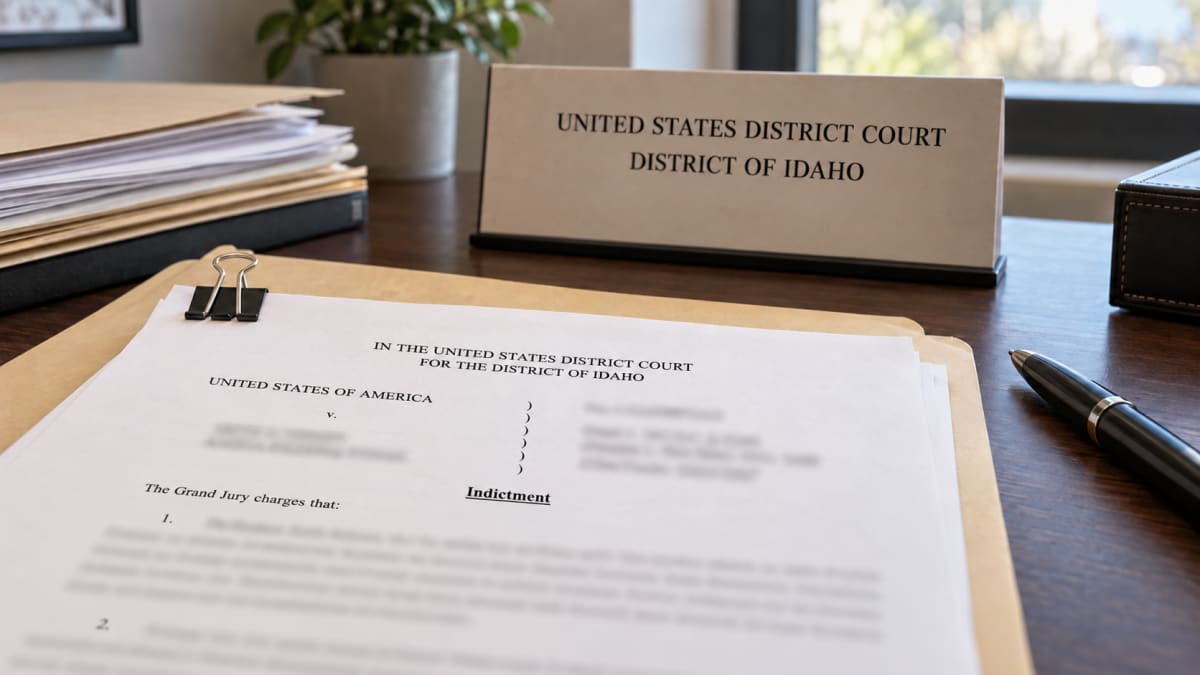
An indictment, a grand jury, and the U.S. Attorney office are not Bonneville County procedure. Deadlines and penalties are harsher.
Why trial experience matters
Federal prosecutors are experienced and well-resourced. They expect defendants to plead. When the evidence is weak or the government's case has problems, you need an attorney who will take the case to trial in U.S. District Court.
Allen Browning has tried 114+ jury cases in Idaho, including a unanimous acquittal on felony trafficking in cocaine in 2020. Federal and state cases both demand trial readiness. Browning Law brings that readiness to federal court.

Most Idaho Falls federal cases are heard in Pocatello. You still need counsel who will show up in that courthouse.
What to do if charged or under investigation
- Do not speak to federal agents or investigators without an attorney.
- Do not destroy documents, delete emails, or move assets.
- If you receive a target letter or subpoena, call Browning Law at (208) 542-2700 immediately.
- Do not discuss the case with anyone except your attorney.
- Gather any documents your attorney requests promptly.
Federal cases move on their own timeline. Early involvement gives your defense the most options.
Free consultation. Clear fees.
Criminal defense is billed with an upfront fee structure, often flat-fee. We do not offer payment plans. The initial consultation is free.
1615 Grandview Dr, Idaho Falls, ID 83402
Ready to talk?
Free consultation. Clear fees.
Criminal defense is billed with an upfront fee structure, often flat-fee. We do not offer payment plans. The initial consultation is free.
1615 Grandview Dr, Idaho Falls, ID 83402. Mon-Fri 9 AM to 5 PM
Frequently Asked Questions: Federal Criminal Defense Defense in Idaho Falls
What is the difference between state and federal charges? +
State charges are prosecuted in county or district court under Idaho Code. Federal charges are prosecuted in U.S. District Court under federal law. The same conduct can sometimes be charged in both systems, though double jeopardy rules may limit that.
Which federal court handles Idaho Falls cases? +
The U.S. District Court for the District of Idaho has divisions in Boise, Pocatello, and Coeur d'Alene. Cases may be assigned to different divisions depending on where the conduct occurred and the type of charge.
What is a target letter? +
A target letter from the U.S. Attorney's Office informs you that you are the target of a federal grand jury investigation. It means charges may be coming. Call an attorney immediately.
Can I bond out in federal court? +
Federal bail is different from state court. The Bail Reform Act governs pretrial release. Your attorney argues for release or reasonable conditions at a detention hearing.
What are mandatory minimum sentences? +
Certain federal offenses carry mandatory minimum prison terms set by Congress. The judge cannot go below the mandatory minimum unless specific exceptions apply. Drug and weapons charges commonly carry mandatory minimums.
Should I cooperate with federal investigators? +
Not without an attorney. Cooperation may be an option in some cases, but it must be structured through your lawyer to protect your rights and your position.
Does Browning Law handle federal cases from Idaho Falls? +
Yes. Allen Browning is licensed to practice in Idaho state and federal courts. The firm is based in Idaho Falls and represents clients across Idaho.
Related Resources
Primary Hubs
Related Idaho Falls Services
Talk with an Idaho Falls criminal defense attorney
Call Browning Law at (208) 542-2700 for a free consultation. We are at 1615 Grandview Dr, Idaho Falls, ID 83402, and we represent clients across Bonneville County and Eastern Idaho. Criminal defense is not handled on contingency, and we do not offer payment plans.